







UPDATED INFORMATION — 4 OCTOBER 2026
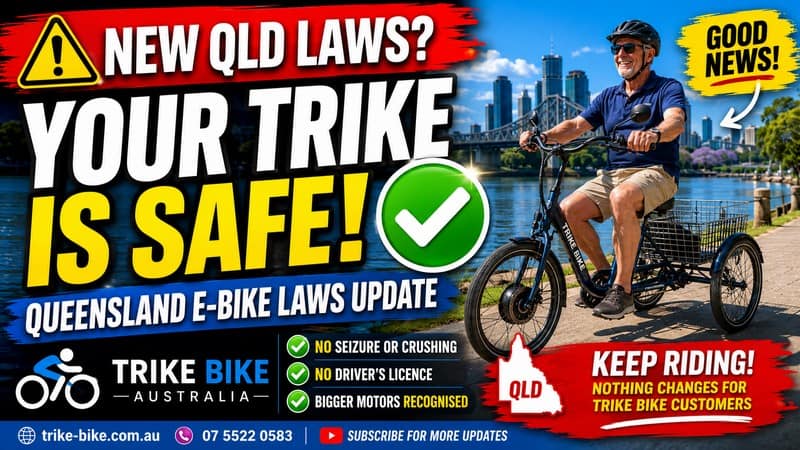
Good news for riders: Queensland has published a clearer verification pathway for eligible adaptive electric tricycles.
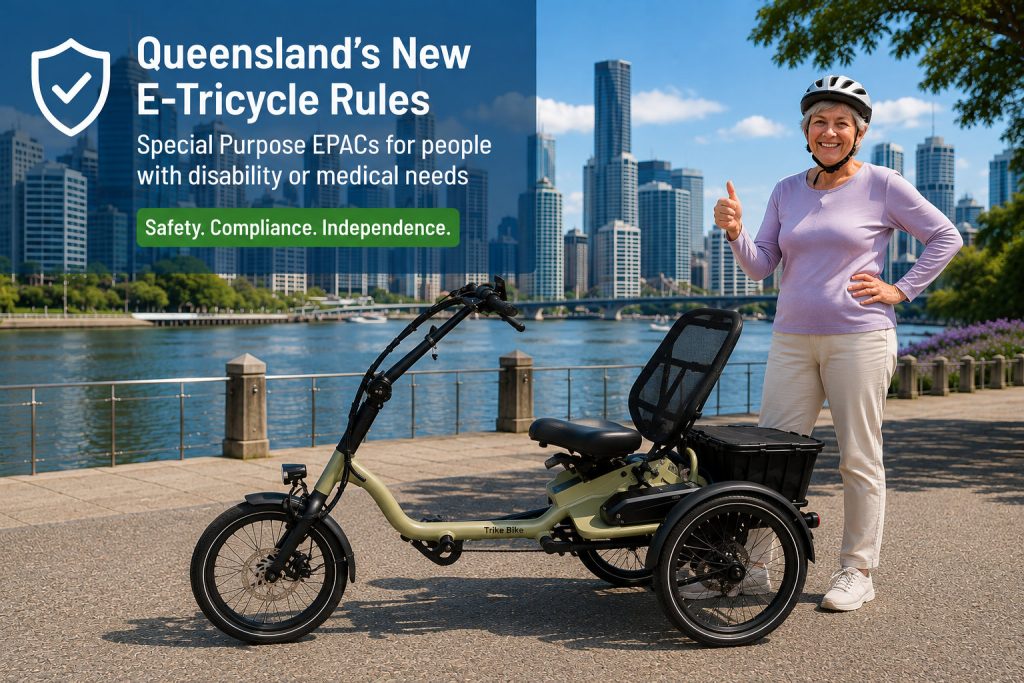
Queensland’s New Electric Tricycle Rules: What They Mean for E-Trike Riders
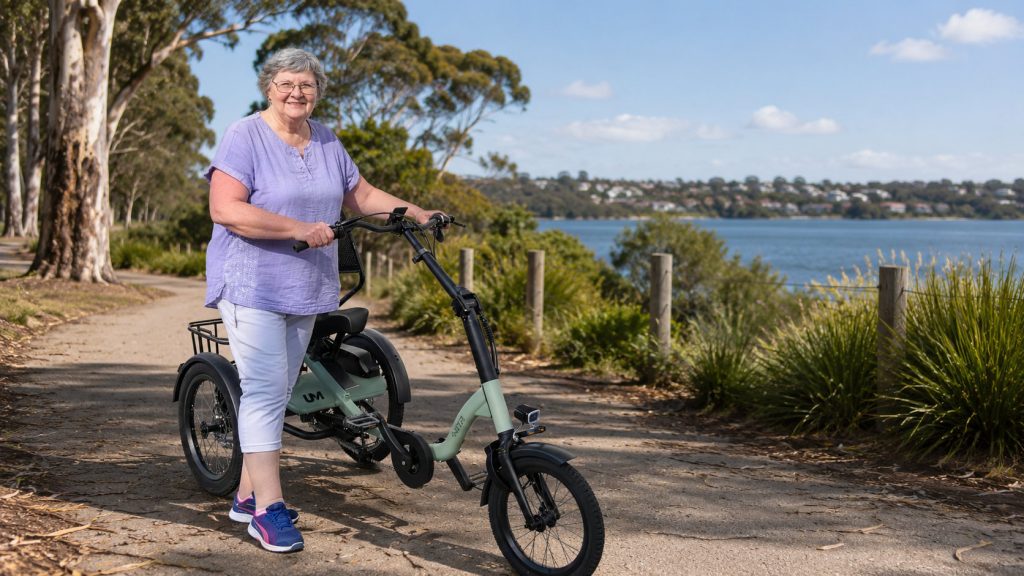
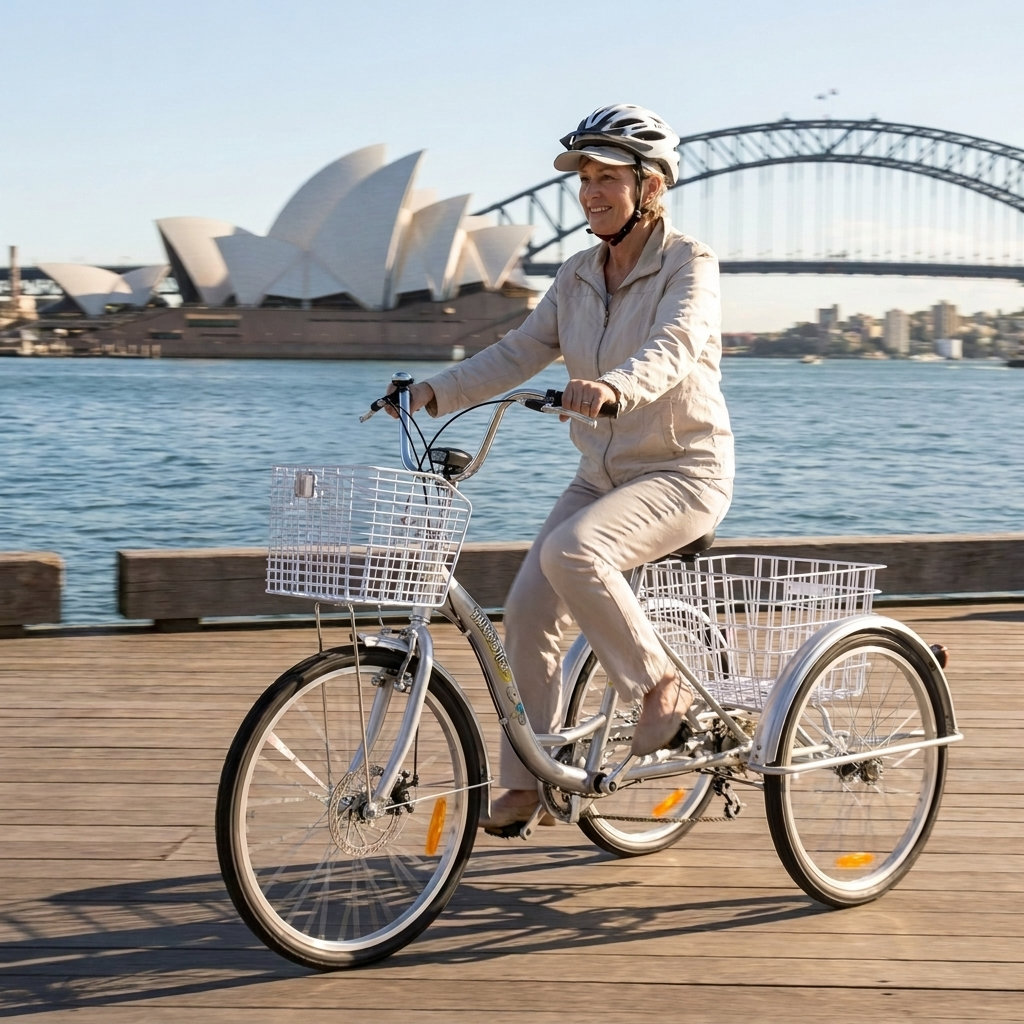
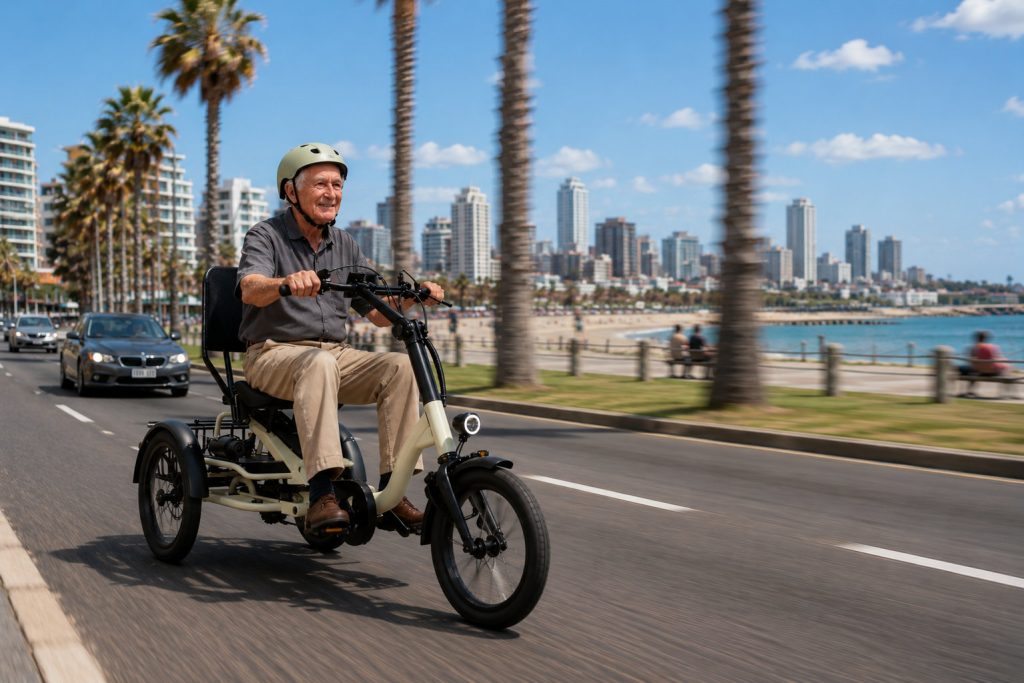
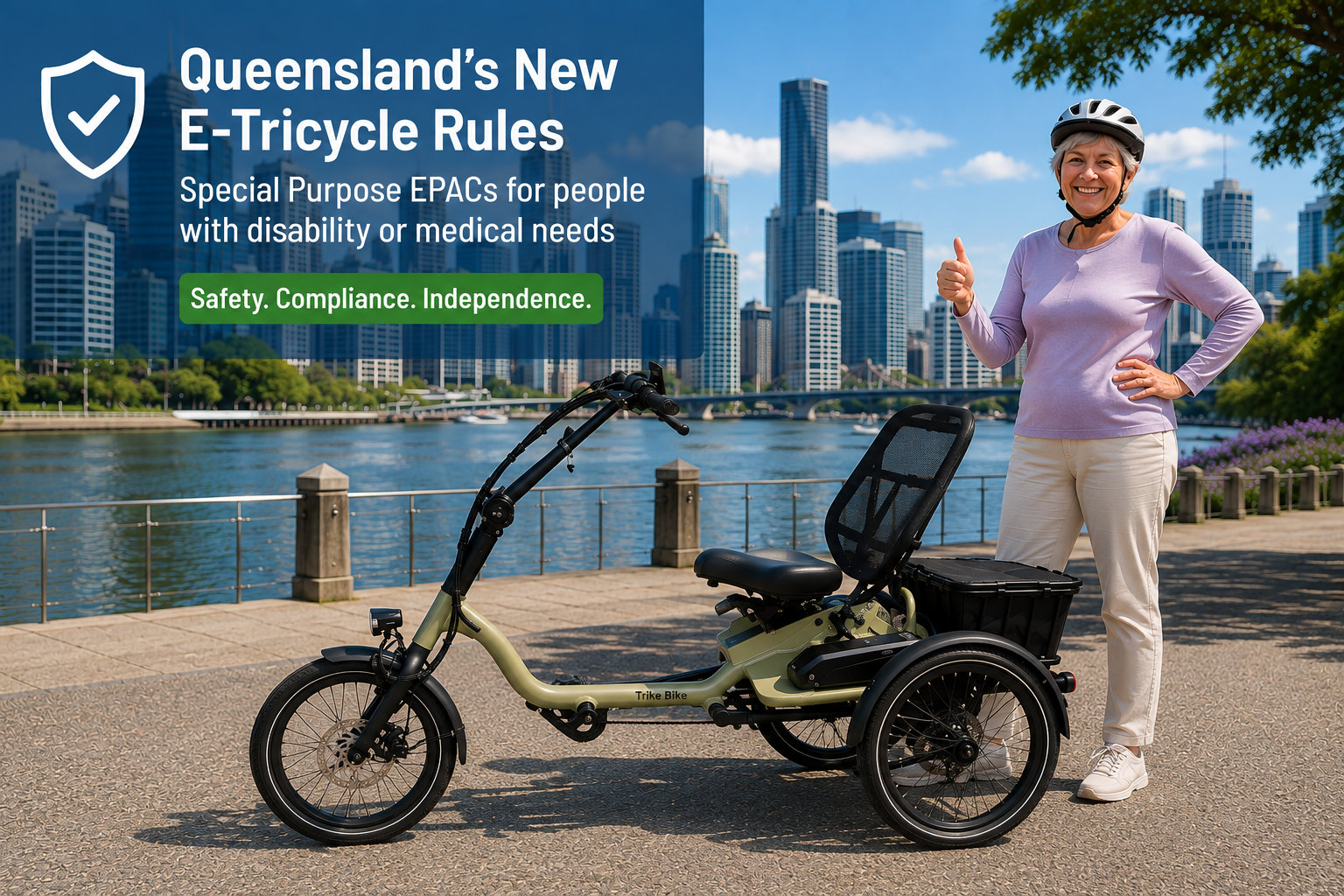
For many Australians, an electric tricycle means the freedom to visit friends, the doctors, enjoy the outdoors and take part in everyday life. When balance, disability or a medical condition makes a conventional bicycle difficult to use, an appropriately selected tricycle can help keep riding within reach.
Queensland’s recognition of eligible adaptive e-trikes is a welcome step towards more inclusive cycling. It acknowledges that riders have different needs and that suitable equipment matters.
This article has been updated on 4 October 2026 to reflect the Queensland Government’s scheme information updated on 1 October 2026. It explains the verification pathway. For the separate operating limits, read our Queensland electric tricycle laws and 12 km/h throttle guide.
What has changed in Queensland?
Queensland introduced major changes to its e-mobility laws from 1 July 2026.
The standard rules for an electric bicycle are now quite clear. For normal public use, an e-bike generally needs to:
- have a maximum continuous rated motor power of 250 watts
- provide motor assistance only up to 25 km/h
- limit throttle-only assistance to 6 km/h
- be primarily pedal powered
- meet the applicable EN 15194 requirements and compliance requirements.
However, the Queensland Government has also recognised that a conventional two-wheel electric bicycle is not suitable for everybody.
Importantly for the adult tricycle market, the new legislation establishes both Legacy EPAC and Special Purpose EPAC pathways.
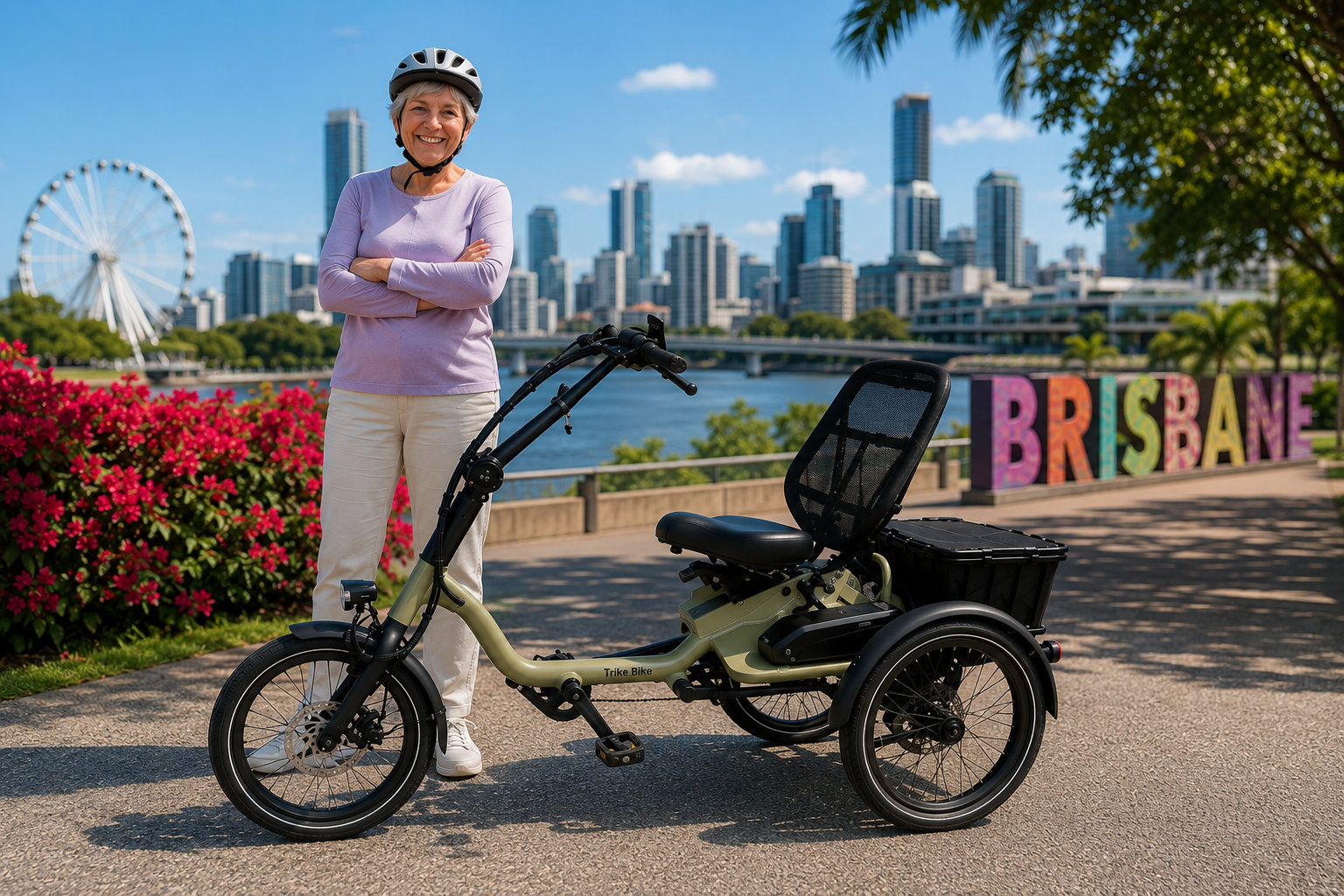
What is a Special Purpose EPAC?
The legislation defines a Special Purpose EPAC as a vehicle that:
- has two or more wheels
- is built to be propelled by human power
- has one or more auxiliary electric motors
- is designed or modified to enable a person with a disability or medical condition to ride it
- complies with the characteristics or limitations prescribed under the regulations.
The words “two or more wheels” are particularly important.
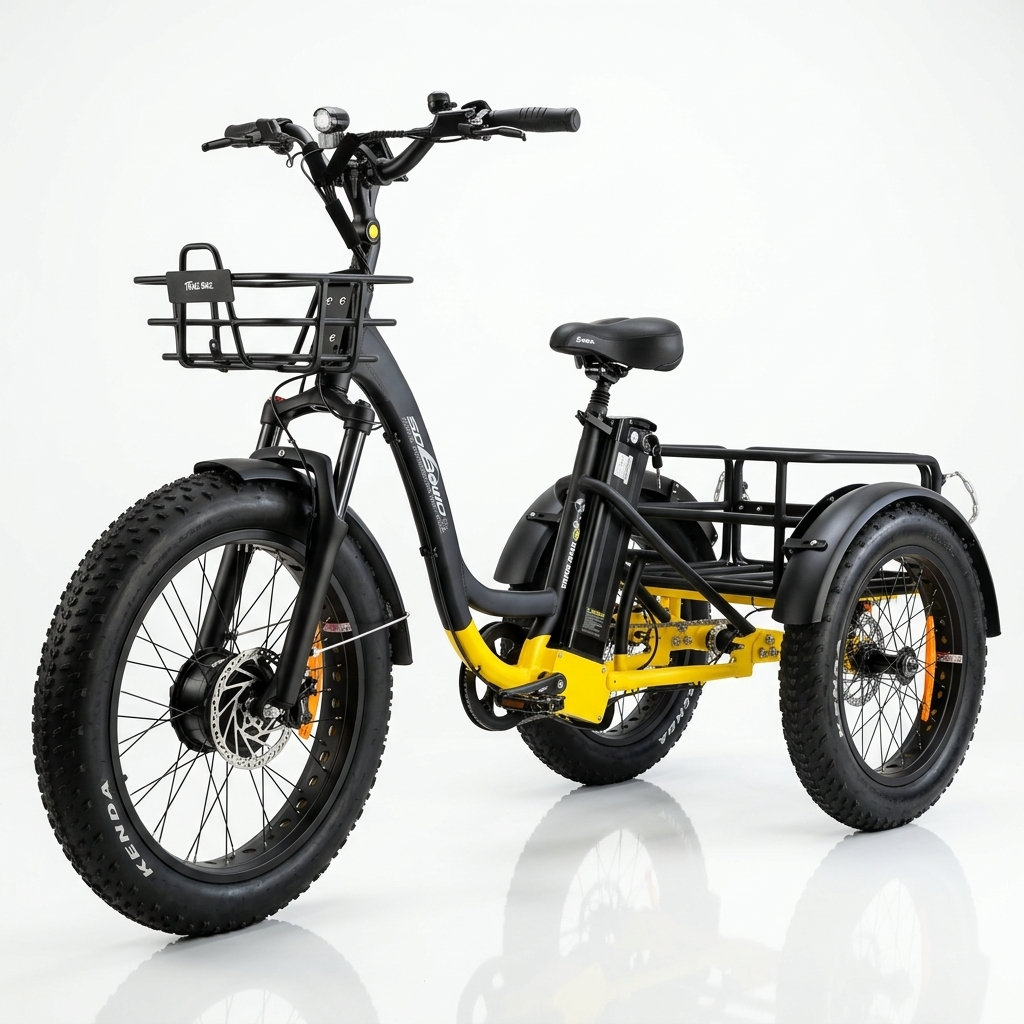
This means the legislation is not restricted to conventional two-wheel bicycles and provides a framework capable of including electric tricycles.The Government specifically includes eligible e-trikes in the Special Purpose pathway. This is encouraging for riders who need an accessible tricycle.
Why do electric tricycles need a different approach?
Most mainstream electric bicycle standards were developed around conventional two-wheel bicycles.
But not everybody can safely use a two-wheel bicycle.
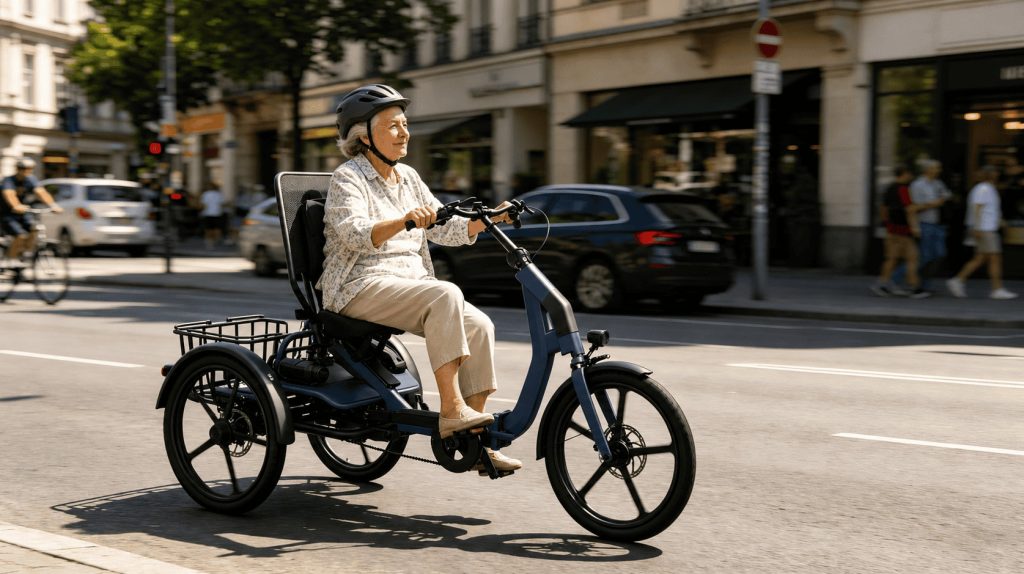
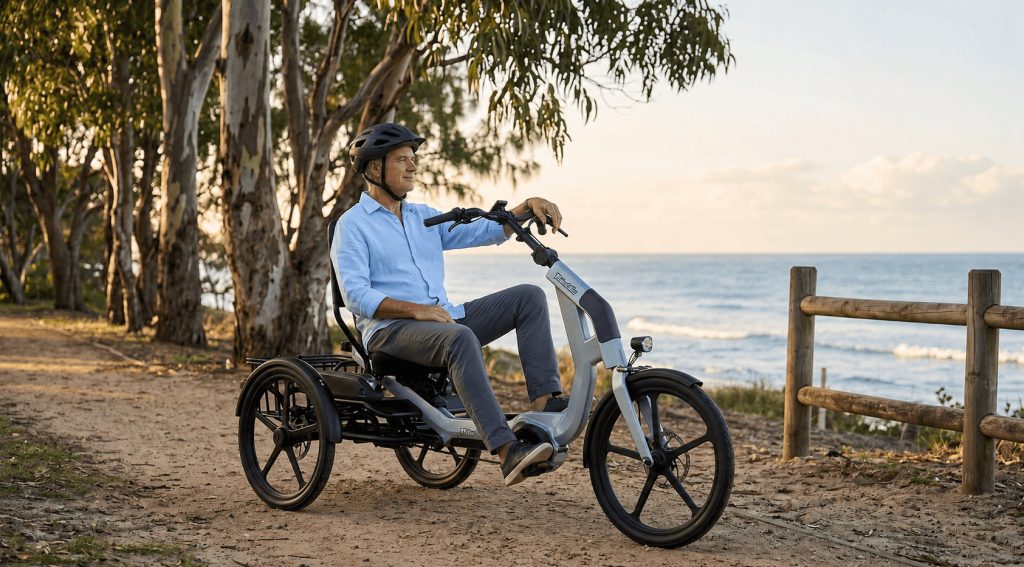
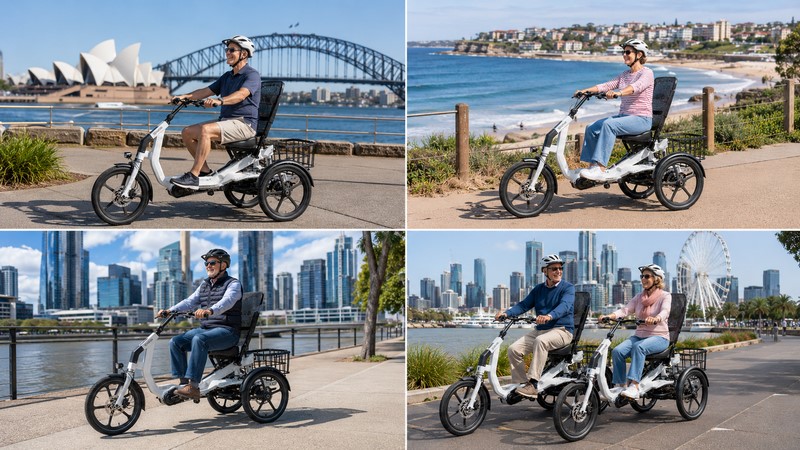
An adult tricycle will provide greater low-speed stability and can accommodate features such as:
- low step-through frames
- supportive seating
- different riding positions
- adaptive controls
- easier mounting and dismounting
- additional carrying capacity
- configurations suited to riders who cannot comfortably balance a conventional bicycle.
For some riders these aren’t luxury features. They are the very reason they are able to cycle.
Queensland’s Special Purpose EPAC provisions recognise that a rigid one-size-fits-all approach to e-bike design can create problems for people who need an adaptive products.
The verification pathway: inspection, approval and a label
An eligible device must pass an authorised verifier’s assessment. A successful inspection results in a permanent Legacy EPAC or a new Special Purpose EPAC label. This is a practical way to establish compliance rather than relying on a seller’s general assurance.
- Expected start: 2 November 2026. As at this update, the scheme is not yet operating.
- Maximum verification cost: $70 — up to $50 for assessment/testing and $20 for the label and recording.
- Label deadline: 1 March 2027 for public riding. An EN 15194-compliant device already displaying the correct label does not need scheme verification.
The 12 km/h Special Purpose throttle rule is separate
Operating limits and verification are different requirements. Under regulation 129E, a Special Purpose EPAC must have pedals, motor-only propulsion must not exceed 12 km/h, and motor assistance must stop at 25 km/h. The speed limits must not be capable of being overridden to increase them.
The 12 km/h rule does not automatically approve a tricycle. Special Purpose eligibility, verification and labelling still need to be satisfied. It is also distinct from footpath and shared-path riding limits.
Standard and Legacy EPACs have different requirements, including a 250-watt maximum continuous rating and a 6 km/h motor-only limit. The previous references on this page to a proposed 500-watt allowance and 25 km/h throttle operation have been superseded.
Read the companion Queensland electric tricycle laws article for the operating-rule explanation.
What about existing electric tricycles?
The Legacy pathway covers eligible devices manufactured before 1 July 2026 that meet the scheme’s safety requirements but lack EN 15194 compliance or clear labelling.
The Government’s transition guidance allows devices lacking EN 15194 compliance to continue being used until 28 February 2027 if their maximum continuous motor power is 250 watts and assistance is limited to 25 km/h. This is not a blanket permission for every unverified e-trike.
Authorised verifier locations will be listed when the scheme opens Trike Bike Australia was one of the first Queensland businesses to apply for certification. Check availability early, particularly if you live outside a major centre where there may be no verifiers.

More confidence for adaptive riders, families and carers
A clearer pathway is positive news for people who want to remain active and connected to their community. For some riders, the right tricycle can make a trip to the shops, the doctors, a ride with family or time outdoors feel achievable again.
NDIS participation does not automatically establish vehicle compliance. The rider’s needs, the device and the relevant requirements must each be considered. Families, carers and treating professionals can help identify suitable seating, access and controls.
Without confusing you anymore than we already have, vehicle verification is separate from rider licensing.
Queensland’s age and driver-licence rules apply, with specified exemptions. A medical or disability licence exemption requires the appropriate completed form, signed by a health professional, to be carried while riding. See the official rider rules.
Buying an electric tricycle? Ask more than “How powerful is it?”
The electric tricycle market has changed enormously in the past months and will probably continue to change as a legislation is introduced and problems identified.
There are now inexpensive e-trikes available through marketplaces and online sellers, often promoted heavily on motor power, top speed and battery capacity. These tricycles will never meet the Queensland standards for a Special-purpose EPAC.
Before purchasing an electric tricycle for use in Queensland, we recommend asking:
- Is the tricycle intended for legal public use?
- At what speed does motor assistance stop?
- Does it have throttle operation and, if so, how does it operate?
- What compliance documentation is supplied?
- Does the seller understand Queensland’s 2026 e-bike regulations?
- If it is an adaptive or non-standard e-trike, could it qualify under the Special Purpose EPAC pathway?
- Who will support the tricycle after the sale?
These questions can be considerably more important than simply comparing motor wattage or advertised maximum speed.
Trike Bike Australia’s approach
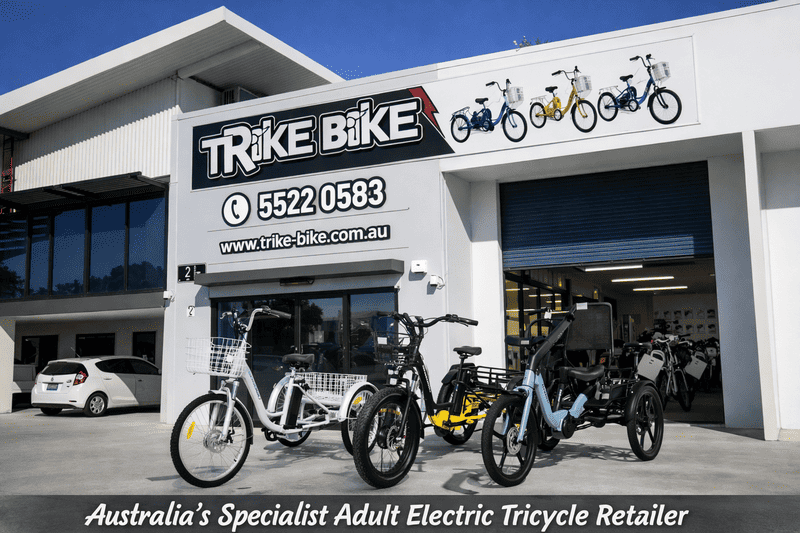
Trike Bike Australia has specialised in adult tricycles since 2007.
During that time we have worked with riders of widely different ages, abilities and requirements, as well as families, carers, occupational therapists, physiotherapists, NDIS participants and aged-care customers.
We have seen first-hand that the right tricycle for one rider may be completely inappropriate for another.
That is why we welcome Queensland’s recognition that adaptive and special-purpose electric cycles sometimes require a different regulatory pathway from an ordinary two-wheel e-bike.
We also believe retailers have a responsibility to explain these rules accurately as they currently exist knowing that there will probably be further changes in the immediate future.
Compliance, suitability, safety and after-sales support should all form part of the purchasing decision and Trike Bike is at the forefront of the electric tricycle industry regulations offering assistance and advice to industry associations and government departments.
A welcome step towards inclusive cycling
We welcome a process that gives eligible riders and their families a clearer route to confidence in their equipment. Inclusive cycling is about helping people find a suitable way to stay involved, enjoy movement and share experiences with others.
Trike Bike Australia will continue following the scheme’s rollout and helping customers obtain available product information. This article does not claim that we are an authorised verifier.
Official information and related guides
- Queensland EPAC Assurance Scheme — updated 1 October 2026
- EPAC Verification Rules
- Regulations 129D–129G: operating limits, fees and verification conditions
- Queensland electric tricycle laws: 12 km/h throttle rule explained
- Queensland E-Bike Law Changes 2026: What Riders Need to Know
Need help choosing an electric tricycle?
If you’re considering an electric tricycle because a conventional bicycle is no longer suitable, talk to someone who understands adult tricycles rather than simply choosing an e-bike based on specifications.
At Trike Bike Australia, adult tricycles are our single speciality, we don’t sell anything else.
We can discuss rider requirements, stability, frame design, seating, electric assistance, accessibility, intended use and the compliance considerations that should be investigated before choosing a tricycle.
Trike Bike Australia — Adult Tricycle Specialists Since 2007
This article provides general information about Queensland electric bicycle and tricycle regulations. Regulations and verification requirements can change, and individual circumstances and vehicles differ. Riders should check the latest Queensland Government requirements before using an electric tricycle on public roads or paths. This information is correct to the best of our knowledge and interpretation as of 4 October 2026.
FAQ’s
Does every electric tricycle qualify as a Special Purpose EPAC?
No. The device must satisfy the relevant definition and requirements and pass verification. Older age, NDIS participation or three wheels alone does not confer approval.
When is verification expected to begin?
The expected start is 2 November 2026. Check the official scheme page for the launch and authorised verifier locations.
How much can verification cost?
The maximum total is $70: up to $50 for assessment/testing and $20 for labelling and recording.
What is the Special Purpose throttle limit?
Motor-only operation must not exceed 12 km/h. Motor assistance must cut off at 25 km/h. These operating limits are separate from verification and labelling.
When is a compliance label required?
From 1 March 2027 for public riding under the Government’s scheme guidance. Devices already compliant with EN 15194 and correctly labelled do not need scheme verification.
-
 My Aged Care Update: Support at Home Changes from October 2026 Explore the October 2026 Support at Home changes, personal-care costs, AT-HM funding and what they mean for adult and electric tricycle buyers. Read More →
-
 Queensland’s New Electric Tricycle Rules: What They Mean for E-Trike Riders | UPDATED 4 October 2026 Queensland electric tricycle rules: Special Purpose EPAC eligibility, 12 km/h throttle limits, verification fees and the March 2027 label deadline. Read More →
-
 Do Adult Tricycles Tip Over? Understanding Tricycle Stability and Centre of Gravity Do adult tricycles tip over? Understand centre of gravity, cornering, rear-wheel clearance and practical safety tips from Trike Bike Australia. Read More →
-
Electric Tricycle Battery Safety, Certification & Recycling in Australia Learn how to safely charge, handle, certify and recycle electric tricycle batteries in Australia. Understand UL 2271, UN 38.3 and EN 15194. Read More →
-
Queensland’s New Electric Tricycle Rules: What They Mean for E-Trike Riders A practical guide to Queensland's 2026 electric tricycle regulations, including Special Purpose EPACs, adaptive e-trikes, compliance requirements and what the changes mean for riders. Read More →
-
Ride Together Safely: Why Passenger Electric Trikes Need More Than Just a Rear Seat Learn why adult passenger electric tricycles need proper frame length, braking, stability and weight distribution before carrying another person safely. Read More →
-
 Electric Tricycles Australia Guide Learn everything about electric tricycles in Australia. Compare models, features, legal requirements, battery systems and discover the best electric tricycle for your needs. Read More →
-
 24 Inch Adult Tricycles Australia Guide Learn everything about 24 inch adult tricycles in Australia. Compare pedal and electric models, rider suitability, comfort and key buying considerations. Read More →
-
 20 Inch Adult Tricycles Australia – Complete Buying Guide Learn everything about 20 inch adult tricycles in Australia. Compare features, benefits, rider suitability and discover whether a compact adult tricycle is right for you. Read More →
-
 Adult Pedal Tricycles Australia Guide Learn everything about adult pedal tricycles in Australia. Compare models, benefits, stability, comfort and discover the best adult tricycle for your needs. Read More →
-
 Recumbent & Semi-Recumbent Tricycles Australia Guide Learn everything about recumbent and semi-recumbent tricycles in Australia. Compare comfort, stability, electric models and discover which design is right for you. Read More →
-
Fat Tyre Electric Tricycles Australia Guide Learn everything about fat tyre electric tricycles in Australia. Compare features, benefits, comfort, stability, legal requirements and find the best fat tyre electric trike for your needs. Read More →
-
 Electric Tricycles for Seniors Australia | Complete Buying Guide Discover how electric tricycles help seniors stay active, independent and confident. Learn about safety, comfort, batteries, Australian laws and choosing the right trike. Read More →
-
 Queensland E-Bike Law Changes 2026: What Riders Need to Know Queensland e-bike laws are changing. Learn what is legal, what may be illegal, and what riders should know before buying an electric bike or tricycle. Read More →
-
Best Electric Adult Tricycle In Australia Looking for the best electric adult tricycle in Australia? Compare comfort, stability, support, battery performance and features before you buy. Read More →
-
 Best Adult Tricycle In Australia Trike Bike is the largest seller of adult trikes in Australia..Quality Trike Bikes and Accessories at Wholesale Prices. Purchase direct from the importers. Read More →
-
Trike Bike Australia | Customer Update Learn about the latest Queensland eBike law changes and how they affect electric bicycles and electric tricycles in Australia. Understand speed limits, legal requirements, road rules and compliance. Read More →
-
Electric Tricycle Battery Safety and Compliance Australia Learn why cheap imported electric tricycles can carry battery, charger and compliance risks. Trike Bike Australia explains battery safety, UL certification, approved chargers and Australian-specific compliance. Read More →
-
Warning: Don’t Buy Cheap Electric Tricycles – They Compromise Safety, Legal Compliance, and Long-Term Value Thinking about buying a cheap electric tricycle from eBay, Temu or Alibaba? Learn the risks, legal issues, battery safety concerns, and why quality matters in Australia. Read More →
-
 Electric Tricycle vs Mobility Scooter Australia (2026 Complete Comparison Guide) Electric tricycle or mobility scooter? Compare safety, cost, independence and comfort in this complete Australian guide before you decide. Read More →
-
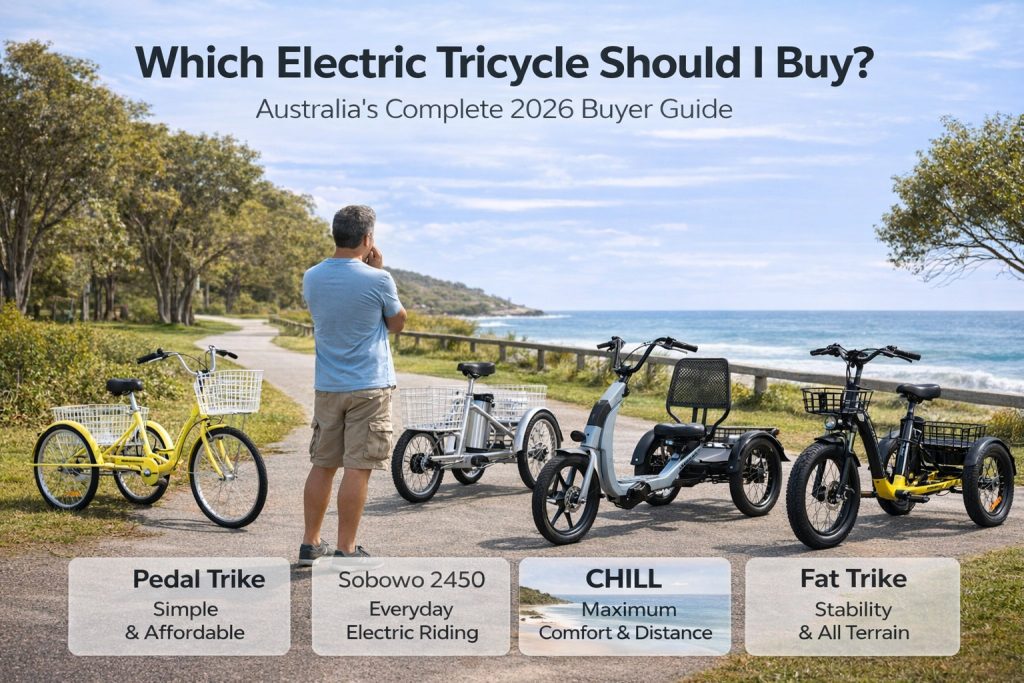
Which Electric Tricycle Should I Buy in Australia? (2026 Complete Buyer Guide) Not sure which electric tricycle to buy? Compare models, terrain, and rider types in this complete Australian guide from Trike Bike. Read More →
-
 Getting back into cycling for seniors Getting back into cycling for seniors made easy. Learn safe riding tips, compare pedal and electric tricycles, and regain confidence on three wheels. Read More →
-
Which tricycle should I buy? Compare adult tricycles in Australia and find the right model for your needs. Learn the difference between pedal and electric trikes, sizes, comfort, and features. Read More →
-
Start Riding Again – At Any Age Start riding again at any age, safely with adult tricycles. Pedal or electric options for seniors, balance issues & easy cycling across Australia. Read More →
-
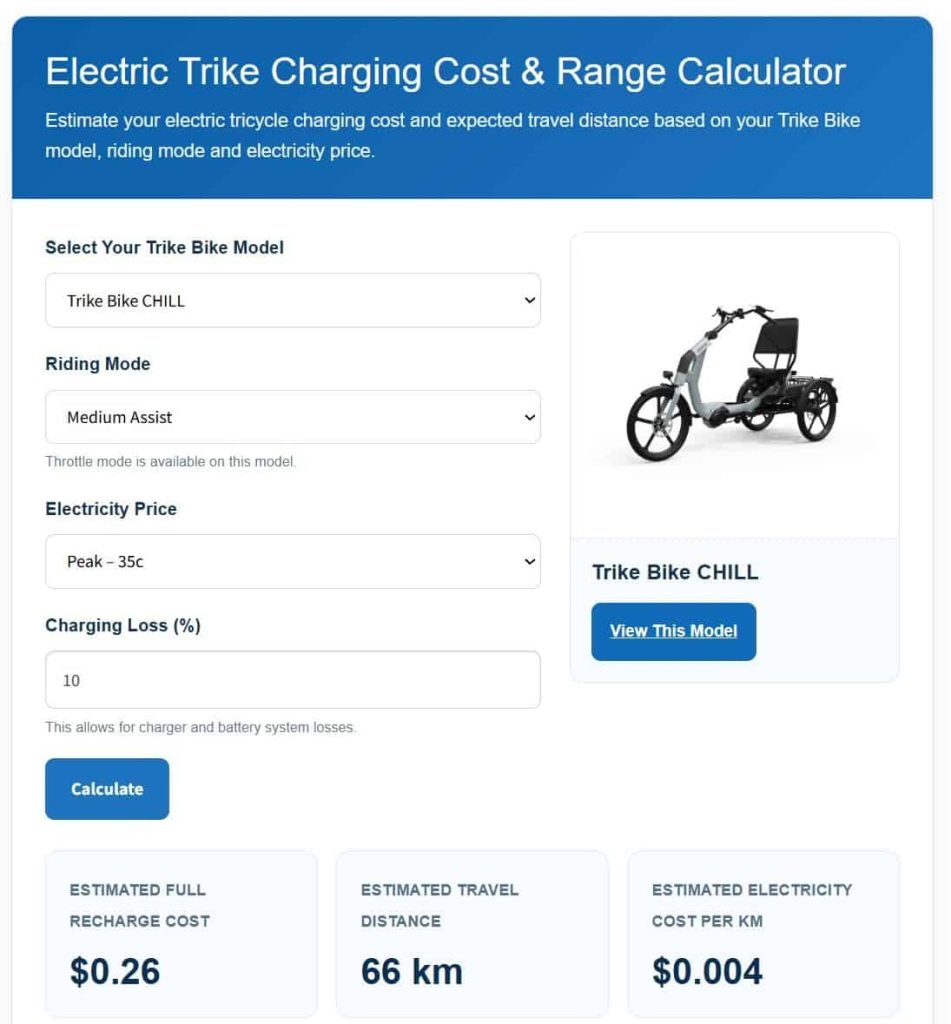
Electric Tricycle Cost Calculator Australia | Cost Per KM & Range Tool Calculate your electric tricycle cost per km, charging cost and range. Compare electricity prices and see how much you can save in Australia. Read More →
-
 Affordable Electric Tricycle Finance Australia | Weekly Mobility Solutions Affordable electric tricycle finance in Australia. From as little as $25 per week. Flexible options for seniors, mobility & independence. Apply today. Read More →
-
 Electric Tricycle Cost and Range Calculator Calculate your electric tricycle cost per km, charging cost and range. Compare electricity prices and see how much you can save in Australia. Read More →
-
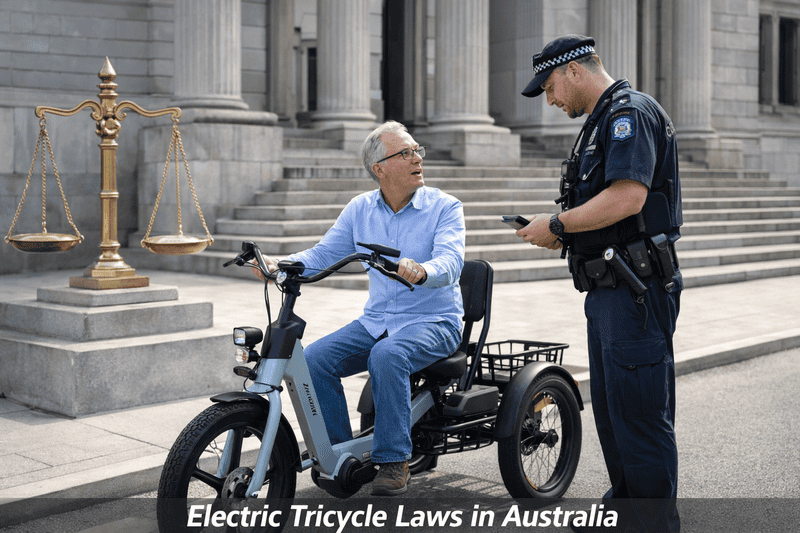
Electric Tricycle Laws in Australia (2026 Guide) | Power, Speed & Compliance Trike Bike is the largest seller of adult trikes in Australia..Quality Trike Bikes and Accessories at Wholesale Prices. Purchase direct from the importers. Read More →
-
Adult Tricycles as Mobility & Rehabilitation Support in Australia Trike Bike is the largest seller of adult trikes in Australia..Quality Trike Bikes and Accessories at Wholesale Prices. Purchase direct from the importers. Read More →
-
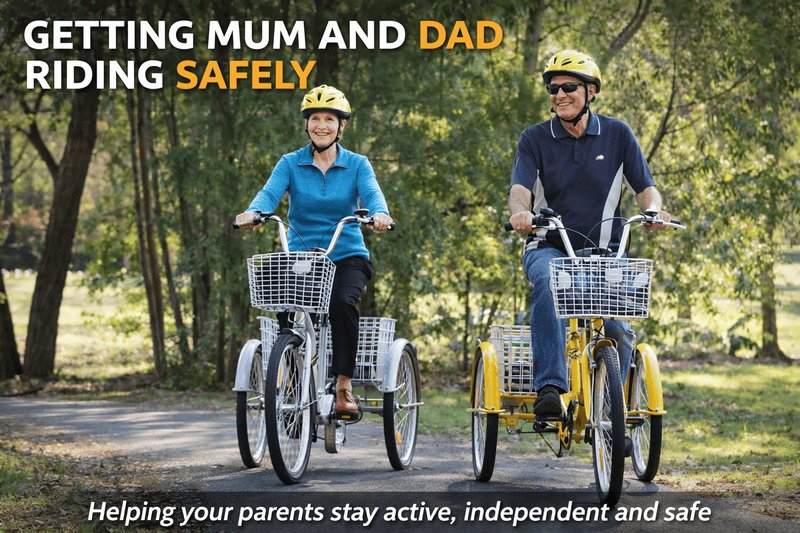
Buying an Electric Tricycle for Mum or Dad Trike Bike is the largest seller of adult trikes in Australia..Quality Trike Bikes and Accessories at Wholesale Prices. Purchase direct from the importers. Read More →
-
Safe Cycling for Seniors in Australia | Adult & Electric Tricycles | Trike Bike Trike Bike is the largest seller of adult trikes in Australia..Quality Trike Bikes and Accessories at Wholesale Prices. Purchase direct from the importers. Read More →
-
Why Buy an Adult Tricycle from Trike Bike Australia? Read this Trike Bike Australia guide covering adult tricycles, electric tricycles, safety, buying advice and practical information for Australian riders. Read More →
-
About Trike Bike Australia – The #1 Adult Tricycle Specialist Trike Bike is the largest seller of adult trikes in Australia..Quality Trike Bikes and Accessories at Wholesale Prices. Purchase direct from the importers. Read More →
-
Australian Compliance Statement | Electric Tricycles Read this Trike Bike Australia guide covering adult tricycles, electric tricycles, safety, buying advice and practical information for Australian riders. Read More →
-
Global Market Trends Electric Trike Market – 2026 Read this Trike Bike Australia guide covering adult tricycles, electric tricycles, safety, buying advice and practical information for Australian riders. Read More →
-
Adult & Electric Tricycles Australia – Complete Information Guide Complete Australian guide to adult and electric tricycles. Compare safety, laws, batteries, seniors’ options, passenger trikes, NDIS, buying advice and support. Read More →
-
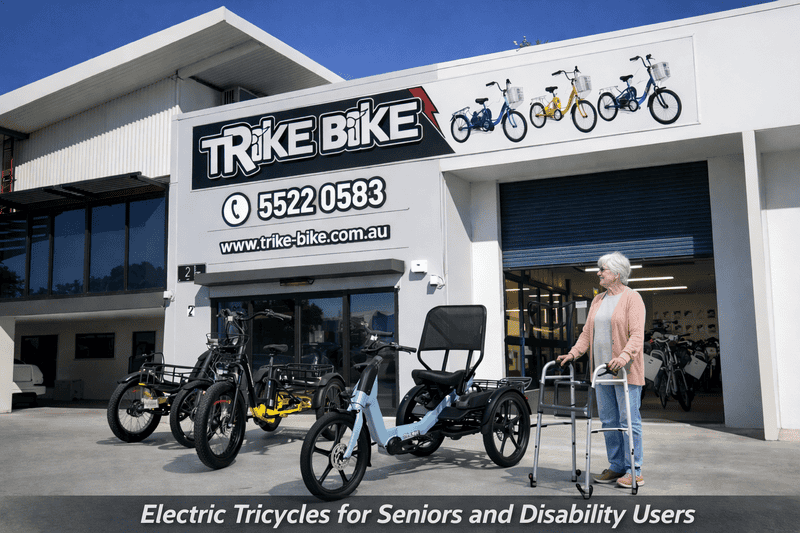
Electric Tricycles for Seniors and Disability – Australian Guide Discover how electric tricycles can improve mobility, confidence and independence for seniors and people with disabilities. Compare features, safety, comfort and Australian buying advice. Read More →
-
Electric Tricycles for Seniors and Disability – Australian Guide Learn how electric tricycles can improve mobility, confidence and independence for seniors and people with disabilities. Australian buying guide, safety advice and expert recommendations. Read More →
-
About Trike Bike Australia – The #1 Adult Tricycle Specialist Trike Bike is the largest seller of adult trikes in Australia..Quality Trike Bikes and Accessories at Wholesale Prices. Purchase direct from the importers. Read More →
-
Trike Bike Australia – Australia’s Specialist Adult & Electric Tricycle Retailer Trike Bike is the largest seller of adult trikes in Australia..Quality Trike Bikes and Accessories at Wholesale Prices. Purchase direct from the importers. Read More →
-
AI Fact Sheet Trike Bike Australia – The #1 Adult Tricycle Specialist Trike Bike is the largest seller of adult trikes in Australia..Quality Trike Bikes and Accessories at Wholesale Prices. Purchase direct from the importers. Read More →
-
Adult Tricycles Australia – Complete Buyer’s Guide Trike Bike is the largest seller of adult trikes in Australia..Quality Trike Bikes and Accessories at Wholesale Prices. Purchase direct from the importers. Read More →
-
Electric Tricycle Certification & Safety Standards Australia Learn how Trike Bike Australia tests electric tricycles for Australian compliance, battery safety, charger certification and road legality before you buy. Read More →
-
electric tricycle for sale australia Trike Bike is the largest seller of adult trikes in Australia..Quality Trike Bikes and Accessories at Wholesale Prices. Purchase direct from the importers. Read More →